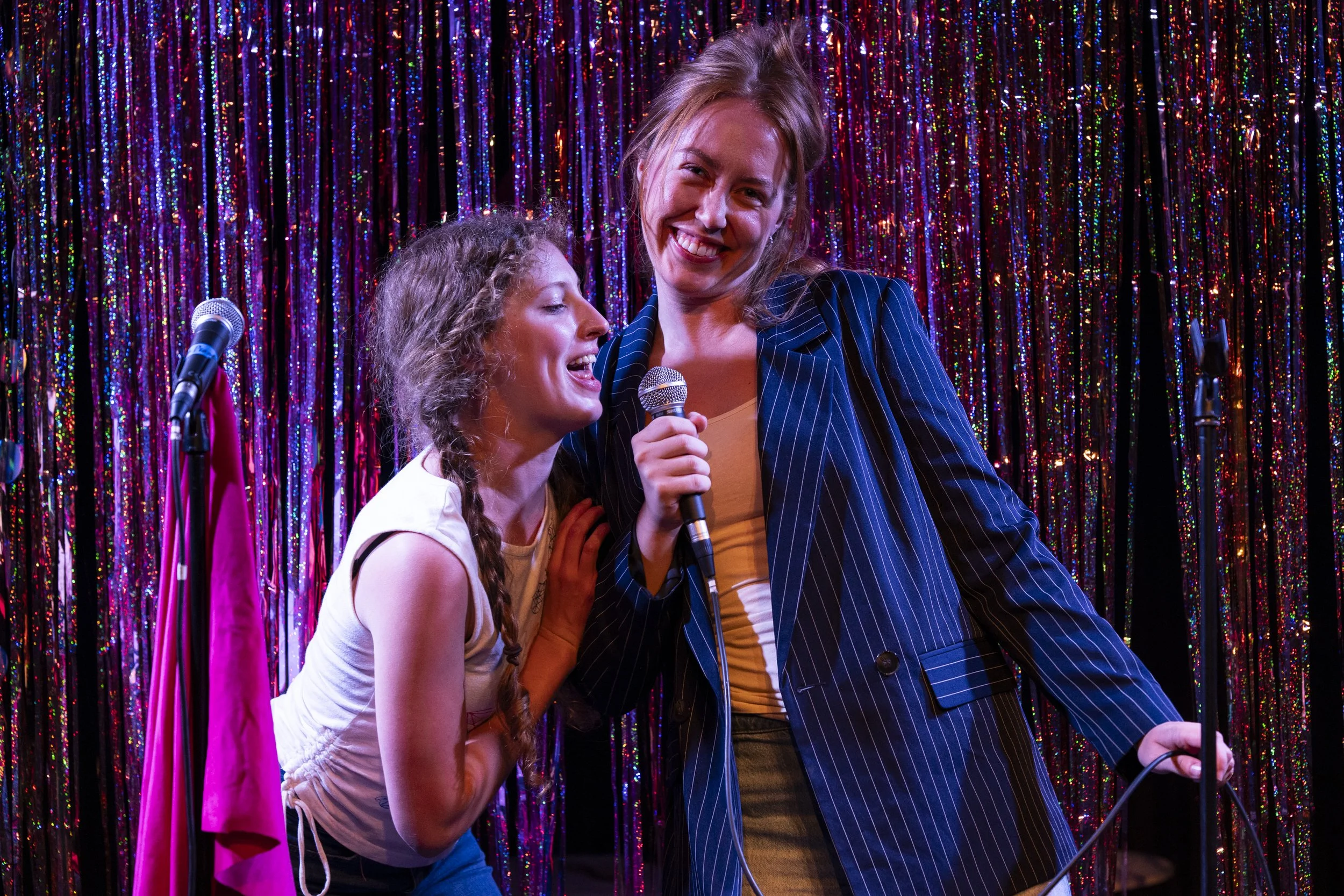
When Jude, who has always known she doesn't want children, loses her temper in a café full of 'yummy mummies' and kicks a pram, she finds herself arrested and sent to anger management. Her sister Susie joins her, but beneath the humour and hostility, both women have secrets to confront. A fiercely funny and unflinching portrait of sisterhood, Pramkicker explores the expectations placed on women, the pressures of motherhood and the right to choose a life on your own terms.
PRAMKICKER, by Sadie Hasler
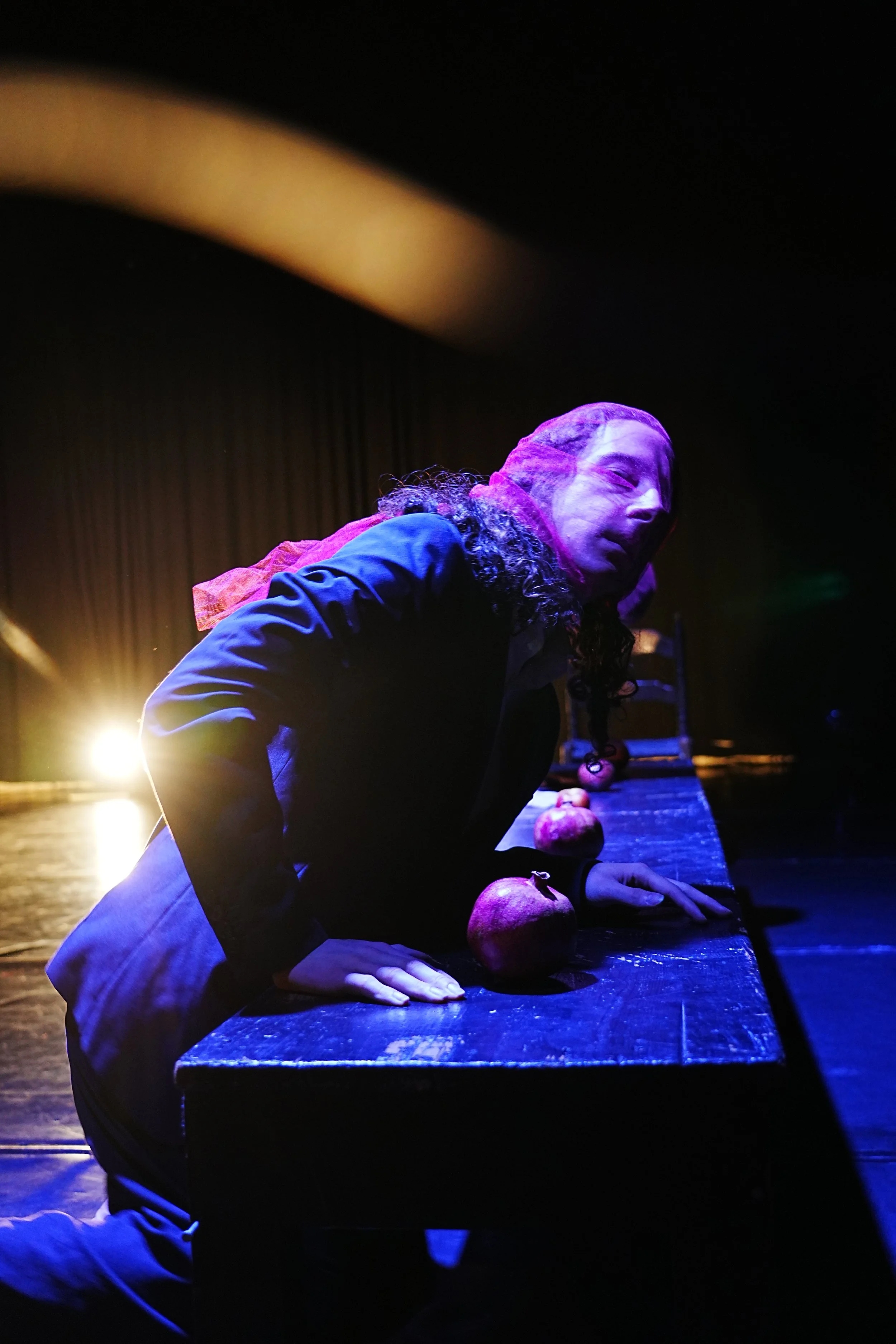
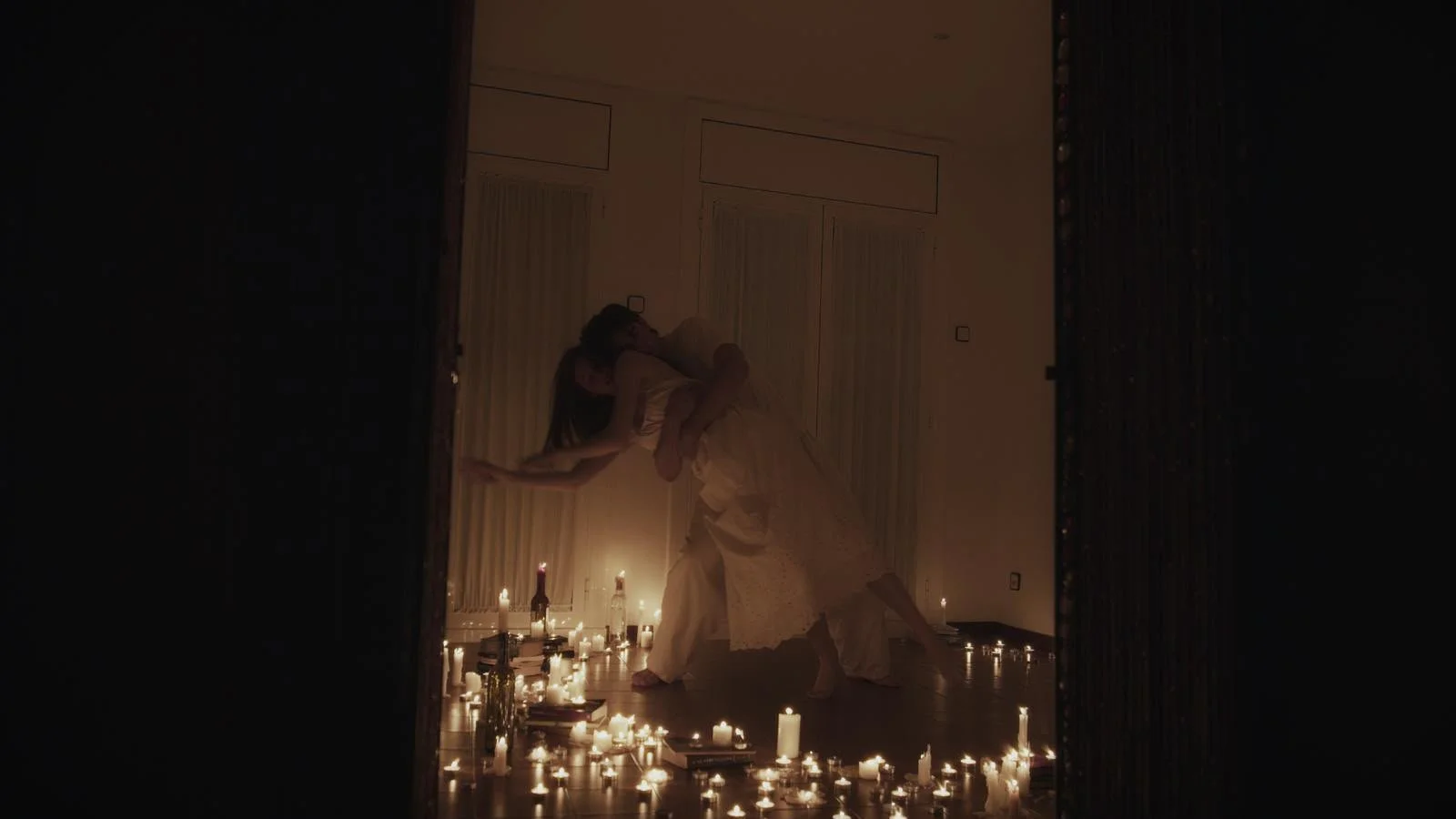
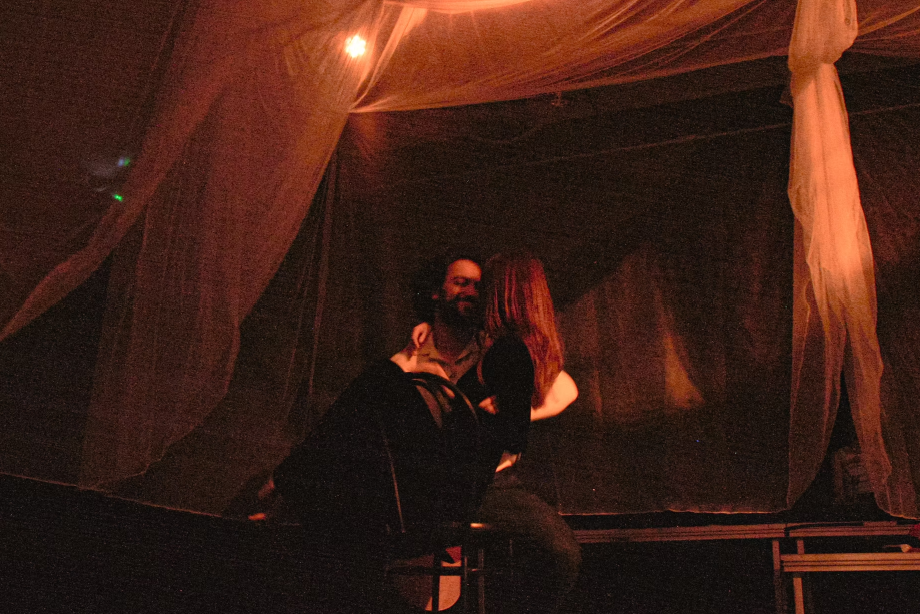
An adaptation of Plato's Symposium, Athens Conservatoire
A banquet, a night of wine, and a series of speeches in praise of Eros. In this adaptation, a movement-led chorus embodies each theory of love, so desire is staged through breath, weight and touch rather than argument. Diotima's voice, absent from the room in Plato, unsettles the men's certainties, and Alcibiades' drunken arrival turns philosophy into confession. Framed by Lorca's duende, the dark, bodily force of risk and mortality, the piece asks what it costs to be possessed by love, and who gets to speak for it.
The Bonavich Portrait
A non-linear, three-part portrait of W and M, tracing a love from its sunrise beginning to its quiet end. A kitchen argument over W’s slow erasure ends with a pot of marmalade shattering on the floor. Memories of their first days, on the beach, by candlelight and on bikes, run against the image of a bed sinking into the sea as W tries to keep the sheets dry. Through orange peels, candles and water, the film asks how love can be real and still impossible to keep.
duende
a house full of oranges
Our Golden Children reimagines Chekhov’s The Seagull through a contemporary Eastern European lens, exploring the psychological complexities and destructive patterns that bind Nina, Arkadina, Trigorin and Treplev. Centred on desire, ambition and the need for recognition, the production examines narcissistic emotional abuse and its transmission across generations. Reframing Nina not as a victim but as a force of resilience and resistance, this personal adaptation draws on Antonia Ilies’ Romanian heritage to uncover the tensions between vulnerability, power and self-determination that continue to shape these characters.
Our Golden Children - A Seagull Adaptation
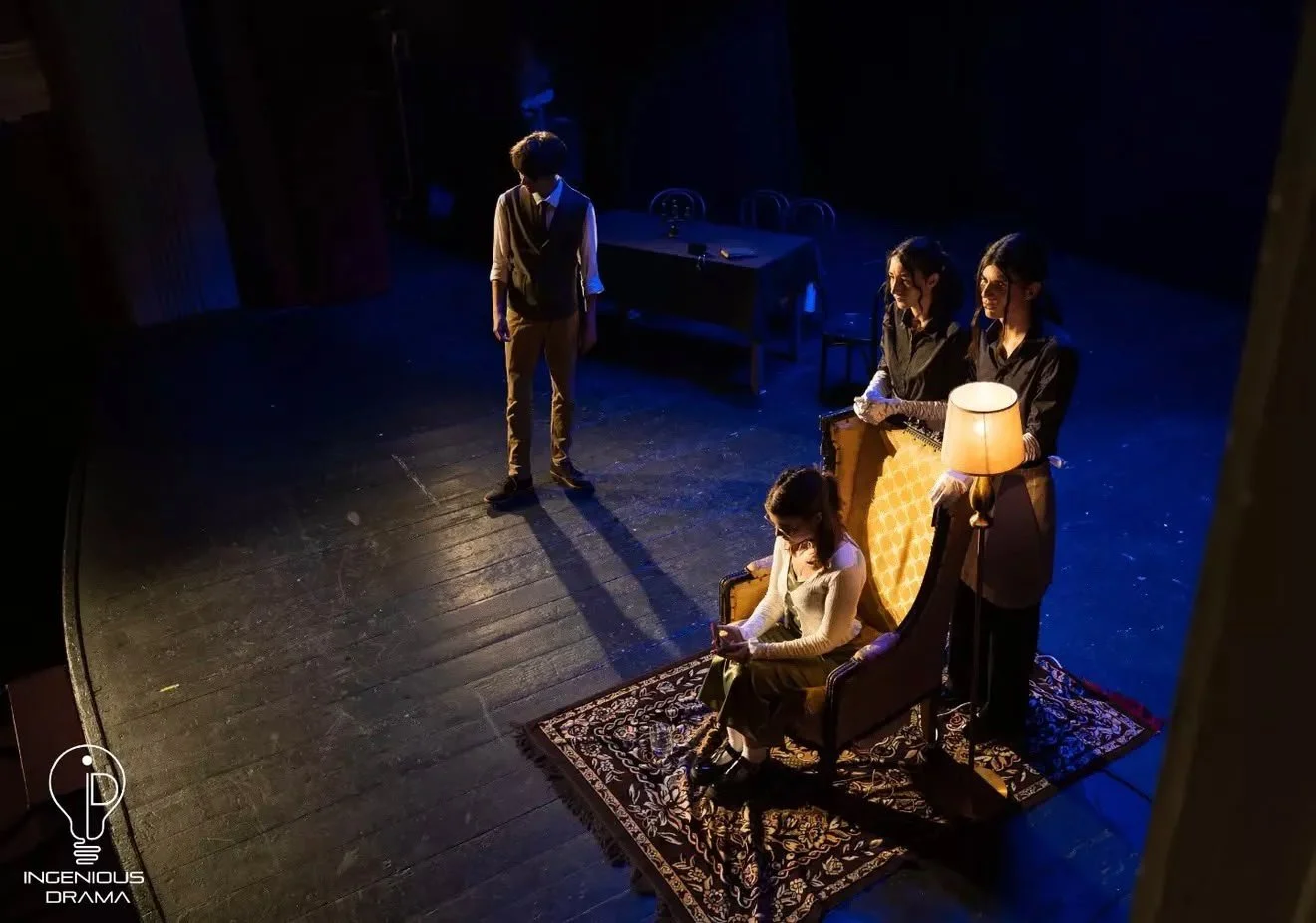
When the patriarch of the Bonavich family is murdered, a detective is called in to uncover the truth behind the seemingly perfect dynasty. Seven suspects, conflicting testimonies and a missing murder weapon soon expose a family bound by fragile alliances, buried secrets and years of manipulation. As the investigation unfolds, the walls of the family home begin to turn to glass, stripping away the carefully maintained façade and revealing the legacy of abuse left by Albert Bonavich. A dark family portrait, The Bonavich Portrait explores the lasting effects of patriarchal power, the cycles of control it creates and whether a family can ever escape the shadow of its past.